

The Caring Museum
In a world where museums are sometimes seen as places disconnected from social and human realities, the concept of caring museum—or museum that cares—offers an approach that reimagines the museum’s role. It becomes a space that fosters well-being, listening, and connection with oneself and with others. The visitor is placed at the heart of the experience.
The notion of care, which is drawing the attention of a growing number of museum institutions, is rooted at Le Monastère in a historical continuity with the healing mission inherited from the Augustinian sisters. Inspired by this 400-year hospital tradition that permeates the very walls of the site, the new permanent exhibition at Le Musée du Monastère des Augustines offers an experience grounded in care.
Through the exhibition Resonances. From Their Lives To Ours, whose official opening will take place on December 18, 2025, this approach fully comes to life: a way of inhabiting space differently, of forming a relationship with objects—and, perhaps, with oneself.
Caring museum: what is it?
The concept of caring museum is based on the notion of care developed by American sociologist Joan Tronto, who defines it as a collective responsibility that goes beyond medical care to encompass all forms of human support.
Museum specialists Anik Meunier and Nathalie Bondil, inspired by movements in museum therapy and art therapy, developed a museum approach centered on well-being3. They chose to build upon Joan Tronto’s model of care4 and adapt it to the museum context by designing spaces attentive to the needs for listening, respect, and support that may arise throughout the visitor’s journey.
They identified four key stages from Tronto’s framework:
- Recognizing the need: Identifying the visitor’s physical, emotional, or intellectual needs;
- Taking responsibility: Creating an environment conducive to well-being;
- Providing care: Designing exhibitions, activities, and services that respond to identified needs;
- Assessing reception: Observing and analyzing how visitors perceive and benefit from the care provided.
A coherent approach within a broader vision
This approach is deeply rooted in the history of Le Monastère, where the Augustinian sisters have always cared for both body and soul.
Indeed, when they bequeathed their founding monastery to the people of Quebec, they expressed the wish that it would remain a place for rest and renewal.
“The question of care simply doesn’t arise—it’s part of Le Monastère’s DNA,” notes Andréanne Cantin, Manager of Le Musée du Monastère des Augustines.
The team working on the renewal of the permanent exhibition includes architects, historians, an art therapist, sound specialists, graphic designers, a curator, archivists, and many other professionals. Together, they aim to create an experience where every element interconnects and harmonizes to evoke a sense of coherence.
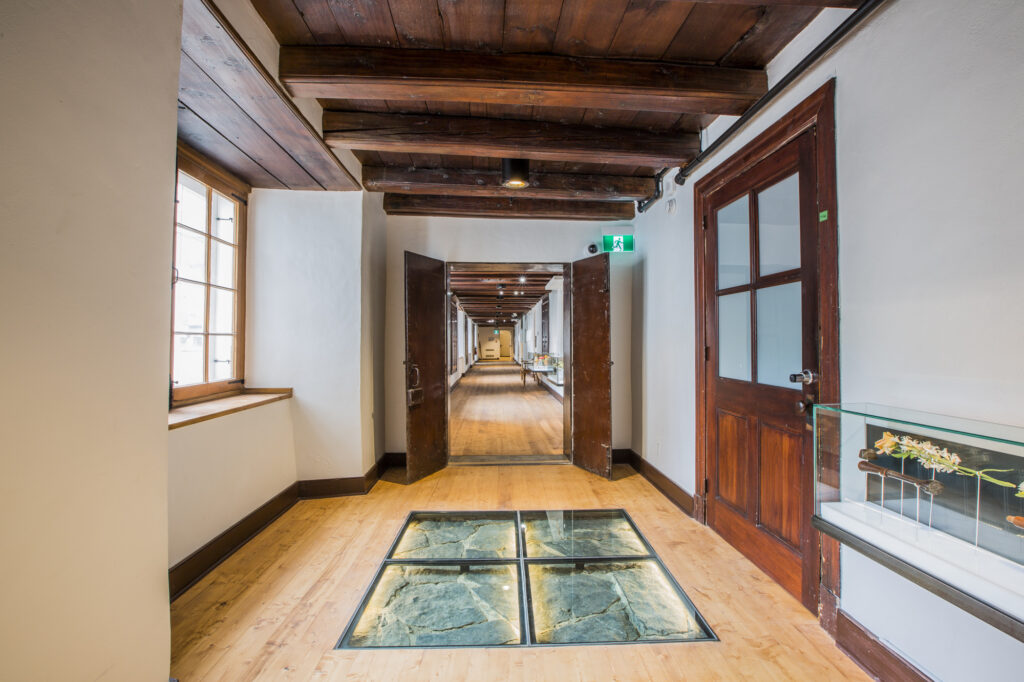
The abundance of natural light, combined with the use of materials like wood, stone, and textiles, already gives Le Monastère a warm and soothing atmosphere.
“We’re truly fortunate to have such a peaceful place, so rich in materials and heritage value,” Andréanne adds.
This pursuit of harmony between meaning, matter, and memory takes tangible form in the exhibition’s scenography.
What is felt, though not always seen
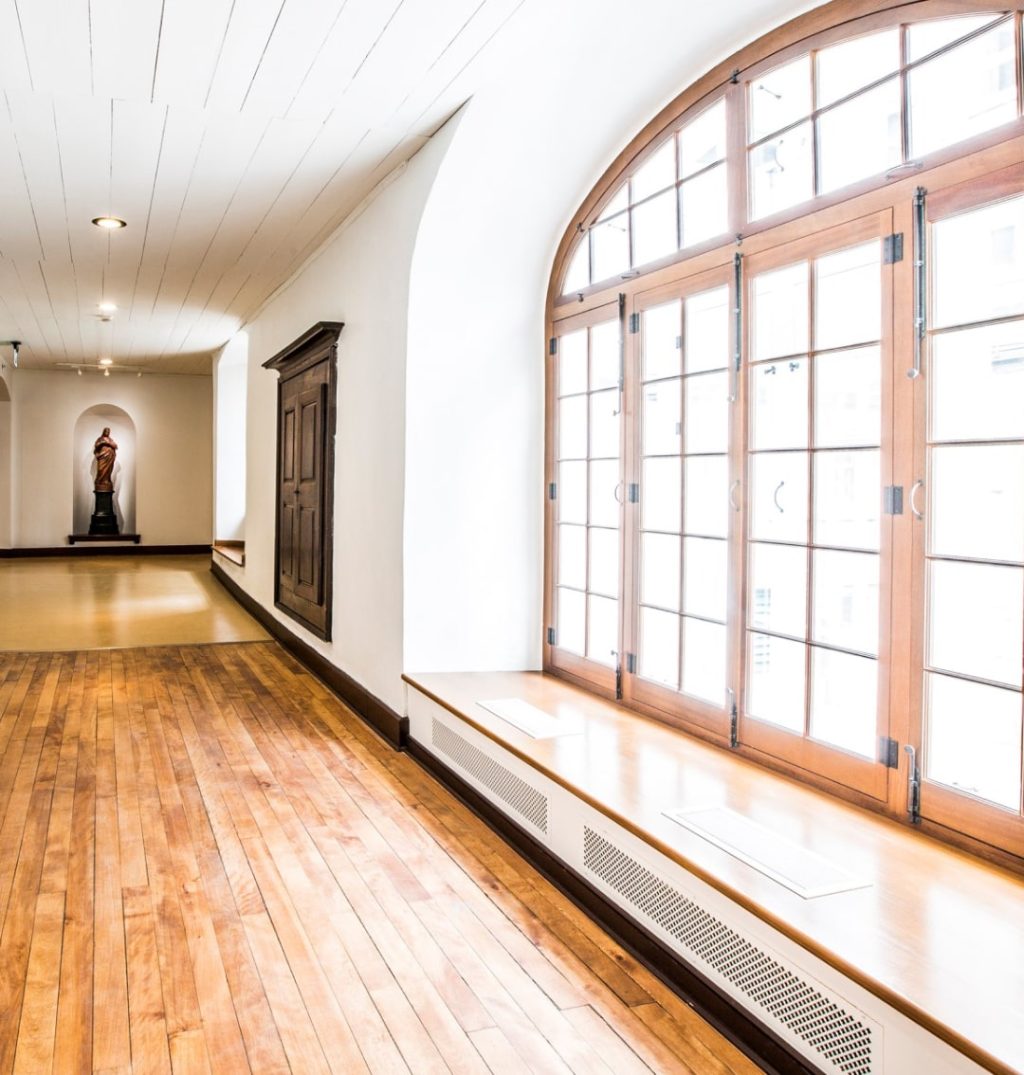
This philosophy of care extends to the smallest details of the museum’s design. The creative team strives to embody this intention within the scenography itself, allowing visitors to feel the care not only through the content but through the container as well.
This is the subtle essence of the project: to design an experience where well-being and emotion emerge from what one senses, sometimes without even seeing it.
Colors, textures, lighting, and soundscapes are all orchestrated in harmony to create a fluid and calming journey, where every step evokes unity and balance. Rounded furniture and translucent panels enhance this sense of softness and embrace, inviting visitors to feel welcomed and at peace throughout their visit.
Sound design also plays a key role. Rather than saturating the environment, the team favors subtle, adaptive soundscapes designed to support calm and, interestingly, silence.
“The sound environment is gentle and discreet; it supports silence and contemplation through certain parts of the exhibition. It accompanies the visitor without ever overwhelming them,” explains Andréanne.
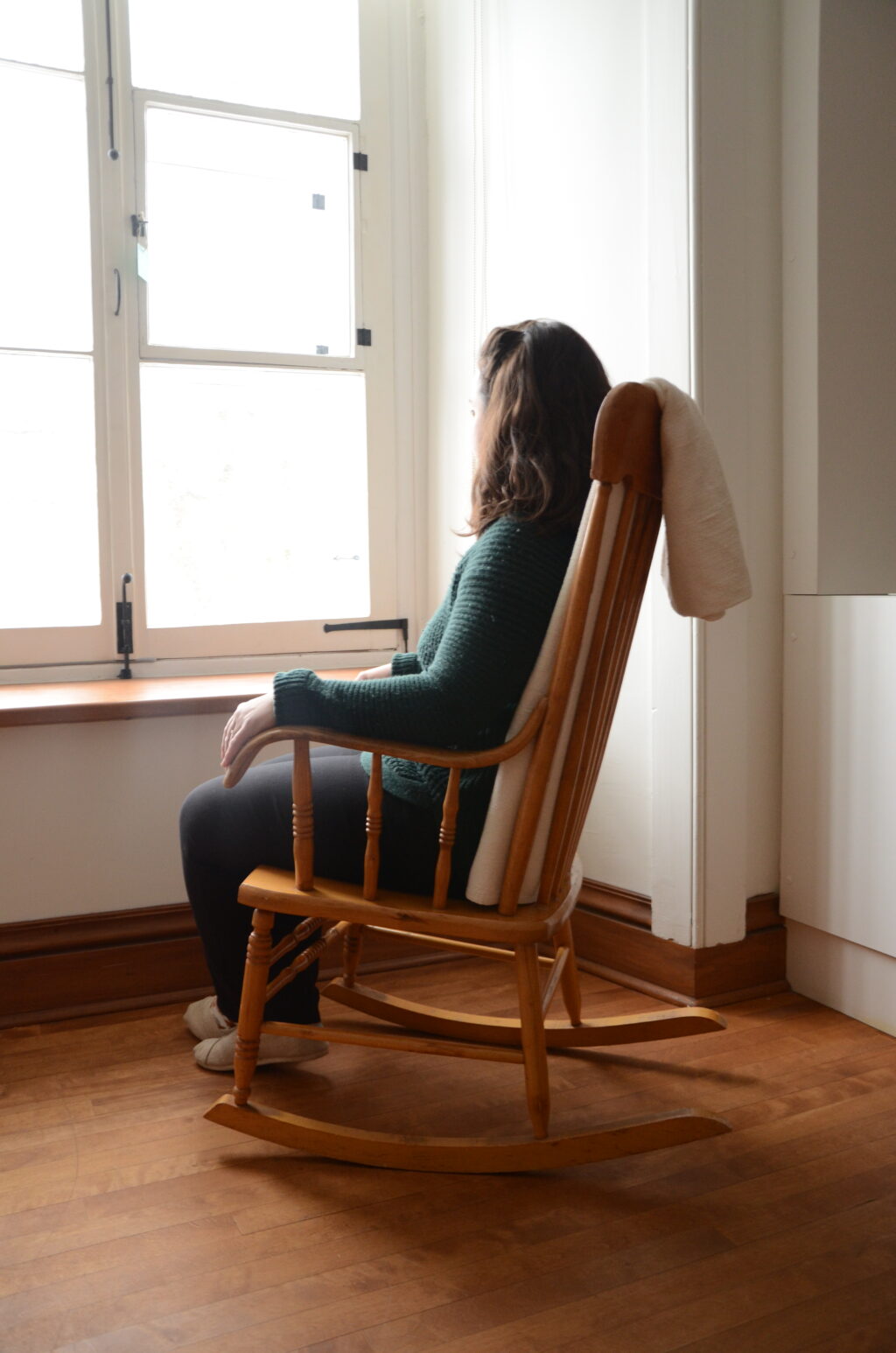
Furniture follows the same principle: comfortable chairs invite pause, contemplation, and inner listening.
“Both the physical and sensory design must convey this coherence and harmony so that visitors leave with a lasting sense of balance.”
Freedom and adaptation to individual needs
Another interpretation of the caring museum in Le Monastère’s new exhibition is flexibility: the museum adapts to each visitor’s rhythm and preferences. Visitors can choose to explore all sections, focus on specific visual or auditory elements, or simply enjoy the space as a place of rest.
“Many people feel pressured to perform during a museum visit, to see and read everything,” says Andréanne. “We want visitors to feel calm and free to explore at their own pace, without any obligation to take in everything. The visual and auditory environments are designed to support this sense of ease, without distraction or sensory overload.”
This approach encourages visitors to pause, observe, reflect or simply rest within the exhibition.
“The exhibition offers opportunities for introspection, connecting the history of the Augustinian Sisters with each visitor’s personal experience. However, we’ve made emotional safety a top priority, since engaging with history can evoke many different reactions.”
An inspiring model for the museums of tomorrow
The concept of caring museum demonstrates that museums can be both spaces of knowledge and places of care. By integrating care into design, scenography, and mediation, Le Musée du Monastère des Augustines hopes to inspire other cultural institutions seeking to place visitor well-being at the heart of their mission.
It shows that a museum can become a refuge for the spirit: a place of encounter and renewal where culture and humanity truly resonate.
Sources:
Brunelle, A.-P., Landry, M., & Meunier, A. (2025). Quand le musée prend soin : le regard du personnel de la médiation muséale sur une expérience d’école au musée. Revista de Ensino em Artes, Moda e Design, 9(2), 1–19. Universidade do Estado de Santa Catarina.
Tronto, J. C. (1993). Moral boundaries: A political argument for an ethic of care. Routledge.