

Easter among the Augustinian Sisters: Traditions and Meals in the 20th Century
For the Augustinian Sisters, the Easter celebrations were among the most important moments of the year. During this period, as in many religious communities, daily life followed the rhythm of the Christian calendar, and meals took on a special meaning. Some days were marked by abundance and celebration, while others invited silence, simplicity, and reflection. Here is how these traditions were once lived among the Augustinian Sisters.
Shrove Monday and Shrove Tuesday
The celebrations begin with Shrove Monday (48 days before Easter), a day eagerly anticipated by the sisters. At dinner, the traditional crepes are served, accompanied by syrup and maple sugar.
From Monday’s dinner until Tuesday evening, the sisters enjoy an extended break. This pause in their routine also means they are allowed to speak freely in the refectory, something that is usually limited in monastic life.
In this same spirit of celebration, a large feast takes place on Tuesday evening—the last moment of festivity before entering a much more sober period: Lent.
Ash Wednesday and Lent
Lent begins with Ash Wednesday, a forty-day period that prepares believers for the celebration of Easter. In the Christian tradition, this time recalls the forty days that Jesus spent in the desert.
During this period, believers are encouraged to fast (eat less) or observe “lean days,” meaning abstaining from certain foods, such as meat, butter, or desserts.
Among the Augustinian Sisters, these practices were adapted to their reality. As many sisters worked in the hospital caring for the sick, their duties were demanding. For this reason, fasting and dietary abstinence remained voluntary, and each sister could choose how to observe this period of sobriety.
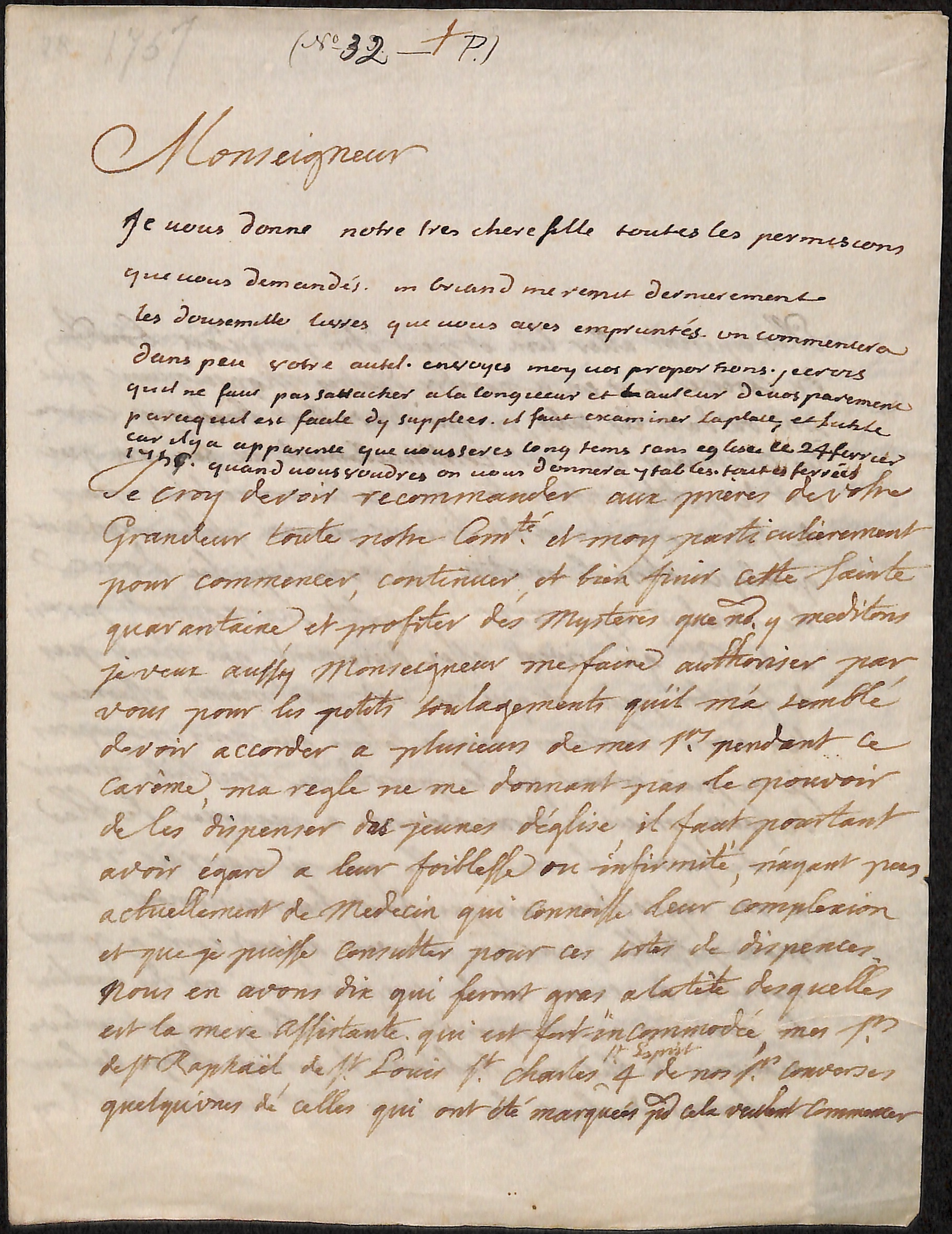
Letter from the Superior of the Hôtel-Dieu of Quebec to Monseigneur de Pontbriand in which she requests dispensations from the Lenten fasting rules, February 23, 1757, Quebec, Le Monastère des Augustines, Fonds Monastère de l’Hôtel-Dieu de Québec
Palm Sunday and Holy Week
Palm Sunday marks the beginning of Holy Week.
At the monastery, the day is highlighted with a small treat: crème brûlée served at dinner. Afterward, meals return to simpler fare, and one must wait until Maundy Thursday for another special dish to appear on the menu: wine gelatin cups, also served at the end of the meal. The Maundy Thursday supper is very modest: a simple rice stew.
Good Friday, which commemorates the death of Jesus, is one of the most austere days of the year.
Meals are taken in silence, reflecting this atmosphere of mourning and the need for reflection. At lunch, a pea purée is served alongside a dish called matelote, a mixture of mashed potatoes, roasted onions, and canned salmon.
The supper is even simpler: nothing more than buttered bread and the remainder of the pea purée. No dessert is served.
Easter Sunday
After the weeks of Lenten sobriety, Easter Sunday is a time of great joy and renewal. According to Christian tradition, it celebrates the resurrection of Christ.
At the monastery, the atmosphere becomes more festive. The sisters sometimes organize plays and enjoy various activities. It becomes a full celebration.
The meal is also worthy of the occasion: the famous ham decorated with pineapple is served, along with plenty of sweet desserts.
A heartwarming tradition emerged after World War II. The Augustinian Sisters working at the hospital would receive chocolates from doctors and patients. The monastery’s superior would collect these and, at the Easter dinner, distribute them fairly among all the sisters.
“On Easter Sunday, we had ham. Then, what was most appreciated—around 1945–1950, after the war—was that doctors and patients who had been treated at the hospital gave a lot of chocolate to the Augustinian Sisters; all these boxes of chocolate were kept by the superior. The day before Easter, she would bring them to the kitchen, and we would distribute them to each sister at her place in the refectory. It was on the menu for Easter dinner.”
This tradition is thought to have started around 1945 and ended in the 1960s, when the hospital came under state administration.
Later in the 20th century, the Augustinian Sisters would mold chocolate by hand to give as gifts on special occasions. Many of these molds are now stored in Le Monastère des Augustines’ museum collection. Interestingly, the lamb-shaped mold is still used today—not for chocolate, but for maple fudge!
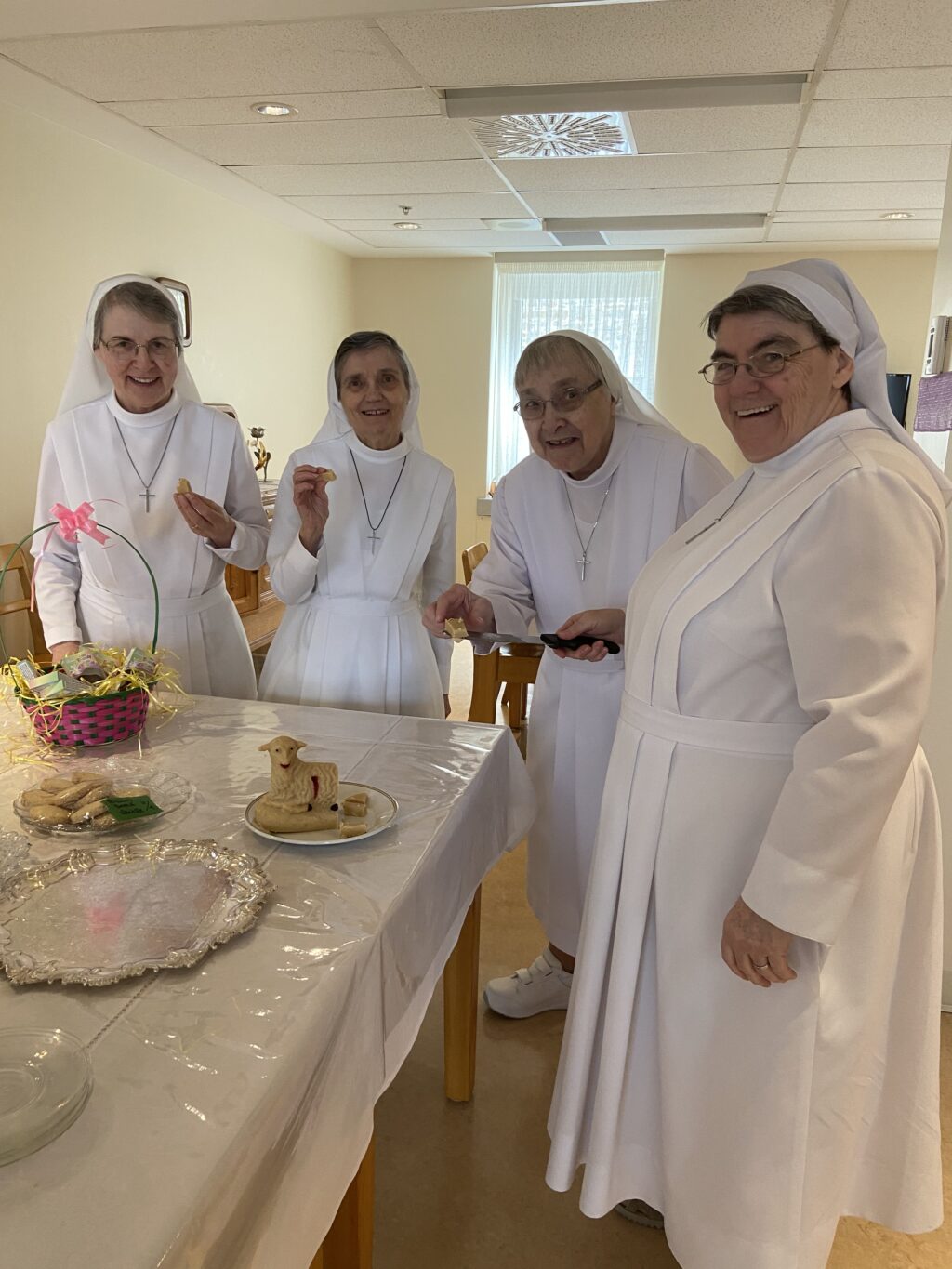
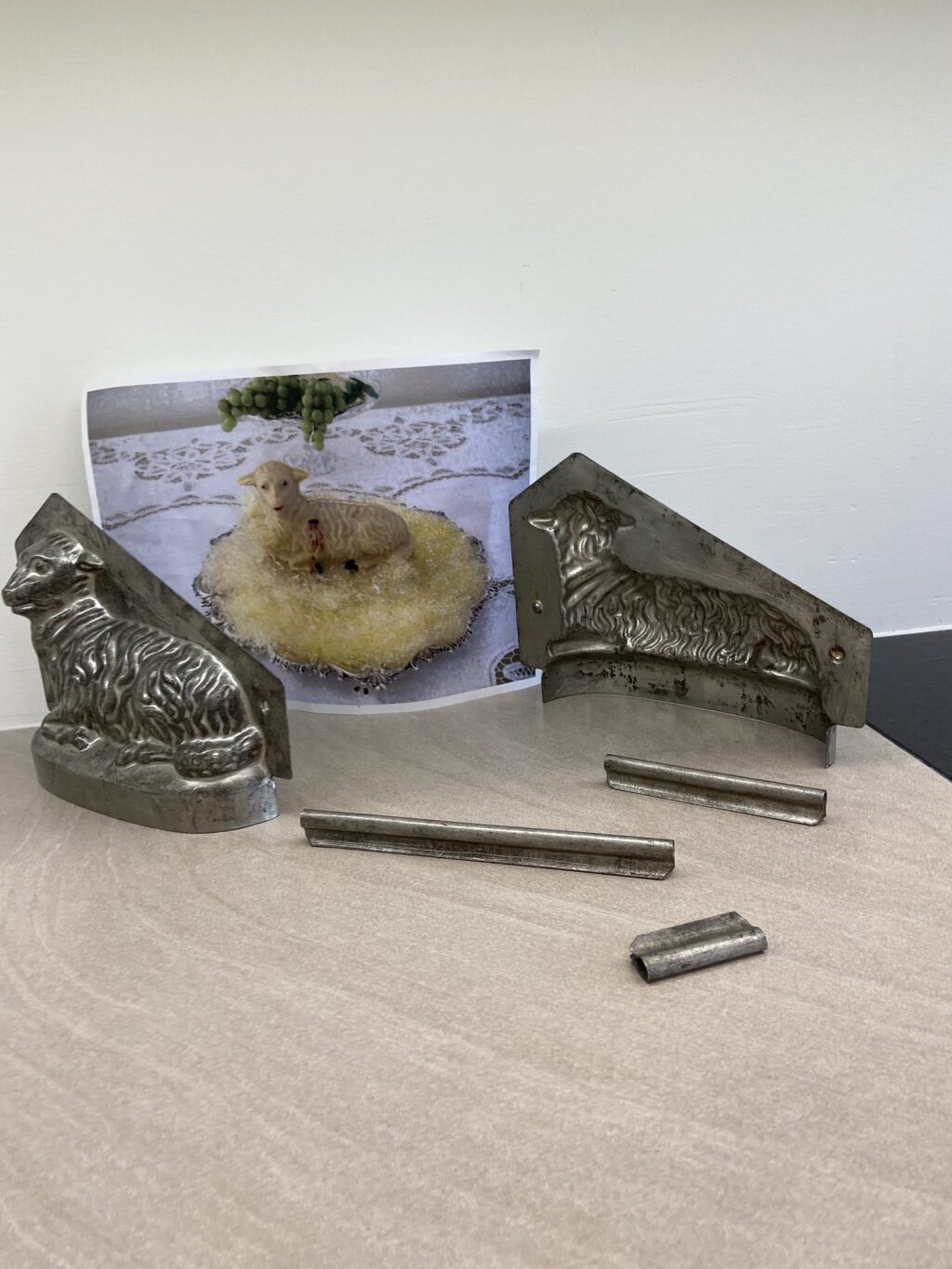
We can see that, over time, some practices have changed. Yet for the Augustinian Sisters, the Easter season has always been a significant time, bringing together spiritual life, community spirit, and shared meals to mark one of the greatest celebrations in the Christian calendar.
Text inspired by Estelle Girard’s article. For more information on Le Monastère’s archives: https://archives.monastere.ca/.